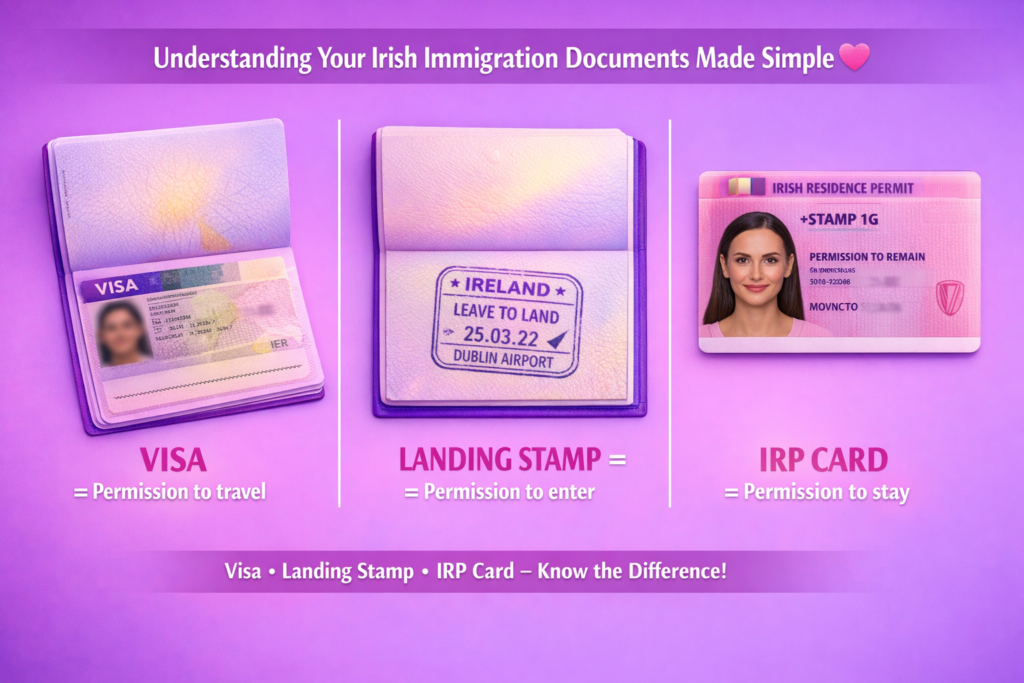
🧭 Your Irish Immigration Journey: Travel → Enter → Stay
I’ve noticed that many people use the word “visa” to describe all kinds of immigration documents. It’s completely understandable, because the terminology can be confusing. But it often leads to moments in consultations where someone says, “I need to renew my visa,” when what they mean is residence permission or their employment permit.
So, let’s go back to basics and clarify what is what.
What is an Irish visa?
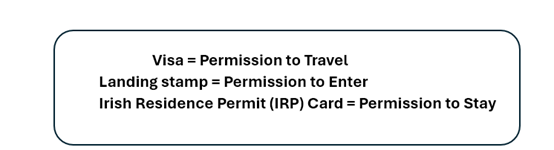
An Irish visa is an endorsement placed on your passport or travel document that allows you to travel to Ireland. It does not give you permission to enter or stay in the country. Even with a visa, an Immigration Officer at the border can refuse entry.
A visa is not a “right to enter” or a “right to stay.” It is simply authorisation to land in the State during the dates shown on the visa.
What is a landing stamp?
When you arrive at border control, an Immigration Officer will examine your visa, passport, and other documents. If permission is granted, the officer places a landing stamp in your passport showing the purpose of your visit (holiday, work, study, etc.) and how long you may stay.
The landing stamp proof your date of entry in the State.
🌍Who requires a visa to enter Ireland?
Not every non‑national need a visa to enter Ireland.
The official list of visa‑required and non‑visa‑required nationalities is maintained by the Irish Immigration Service Delivery (ISD). It is set out in the Immigration Act 2004 (Visas) Orders and updated from time to time by the Minister for Justice through Statutory Instruments.
You can check if you require a visa to travel to Ireland here:
https://www.irishimmigration.ie/visa-non-visa-required-nationalities
Main types of Irish visas:
- Short‑stay (C) visa – This allows you to stay in Ireland for up to 90 days. It’s used for short‑term courses, visiting family or friends, business visits, and similar short stays.
- Long‑stay (D) visa – If you need a visa to enter Ireland and plan to stay for more than 90 days, you must apply for a D visa before you travel. This includes Employment Visas, long‑term Study Visas, and Join Family Visas.
- Correct category (study, work, visit, etc.)
What is a Residence Card?
If you plan to stay in Ireland for longer than 90 days, you are required to register with the Irish Immigration Service Delivery (ISD) after you arrive. This applies to most non‑EEA nationals, whether you’re here to work, study, or join family.
Registration is what gives you your residence permission — it’s separate from your visa. When you register, you will receive an Irish Residence Permit (IRP) card. A credit card sized residence document that proofs your legal permission to stay in Ireland.
Hope you find this information helpful and easy to follow. If you’d like clarity on your own immigration situation, feel free to reach out for a consultation.